Competitive analysis of token launchpads on Solana

Before launchpads came into existence, token creators needed to know how to learn how to code in order to deploy. This was not only difficult for just anybody who looked to join or even create a community behind a token.
Some complications with the pre-launchpad token creation era was:
- Creator had to have the technical know-how in contract deployment. The creator had to know how to write and modify an ERC-20 or BEP-20 smart contract. Aside from that, understanding gas limits, nonce handling & bytecode would limit the creator from deploying using tools like Truffle or Hardhat.
- Liquidity provision and DEX listing had to be done manually which covered handling of slippage, price impacts and router settings as well as adding liquidity on Uniswap/Pancake Swap.
- Community members had to trust that the deployer wouldn’t rug by pooling liquidity from the pool.
- If a team or an individual wanted to work on tokenomics by including taxation/deflation,vesting/lockups or even supply caps there were no tools to help the creators enforce that.
- There were no measures to prevent sniping by bots which meant most launches were either unfair or had included participants who weren’t aligned with the creator’s vision.
Due to such challenges multiple teams came forward to provide solutions and were able to build businesses around these challenges that suited different creator needs. Examples of Ethereum launchpads include:
- DAO Maker: emphasis on vetted and longer-term projects and was known for its community governance.
- Bounce Finance: provided creators with token auctions and decentralized launchpad functionality while supporting fixed swap & sealed bids as auction formats.
- TrustSwap launchpad: focused on token locks and vesting schedules.
On Solana, projects like Solstarter, Mango Markets(plus Serum) and Solanium came forward to solve token creation problems. Solstarter was the first IDO platform in the ecosystem which included a fair launch system with whitelist and tiered staking as features. Solanium offered decentralized IDOs, vesting schedules and staking tiers.
The launchpad ecosystem has since matured with prominent projects like PumpFun,BelieveApp, MetaDAO and Meteora. In this article, I’ll focus on what I consider on a few projects while doing a comparative analysis in the conclusion section of the piece.
MetaDAO
This platform uses a futarchy-based governance for token launches. What this means is that $META holders get to decide approval of projects using a Polymarket like voting mechanism by trading “pass” or “fail”. This ensures that the quality of projects launching remains high hence fewer scams or rugs are launched for example: Sanctum, Marinade, Jito, Ore and Dean’s List.
Some features supported by MetaDAO include;
- DAO support on launch
- Treasury management and vesting
- On-chain governance
According to their website, $3.6M has been traded on the platform by 2,591 traders across 131 markets on 70 proposals resulting in 14 active organizations.
The main concern with the futarchy model is that there is low participation in terms of traders which means that projects take time to launch. This valuable time lost in the system means that the project has to prolong their launch which slows down their timeline in executing and getting products in the market for users.
PumpFun
Founded by Alon Cohen, Noah Tweedale and Dylan Kerler in January 2024, it has become the most popular launchpad this cycle spawning over 11M tokens deployed and $750M in revenue.
The most popular memes coins over the last two years have come about thanks to PumpFun. You have probably heard of Would, Pnut,GOAT,Moodeng and Fartcoin which have subsequently been listed on T1 exchanges like Binance, Coinbase and Bybit. Aside from memecoins, the launchpad has been responsible for some AI projects like Alchemist AI,DOGE AI,Zerebro, AVA AI and ARC.
The success of PumpFun cannot be understated and its influence in the meme coin sphere is forever sealed in the annals of history. At the peak of their success in Q4’24, the platform was consistently getting over $2B in volume.
The platform went ahead and launched a live streaming feature that allowed creators to livestream to their audience while promoting their coins. However, this feature became problematic as some creators were streaming some NSFW in order to gain mindshare amongst buyers. It was later suspended in November 2024. Subsequently, the platform was banned by the Financial Conduct Authority in the United Kingdom in December 2024.
Token creators by filling in the form below and clicking create. There’s an option to purchase a percentage of your own coins before you launch it for a flat fee of $2.
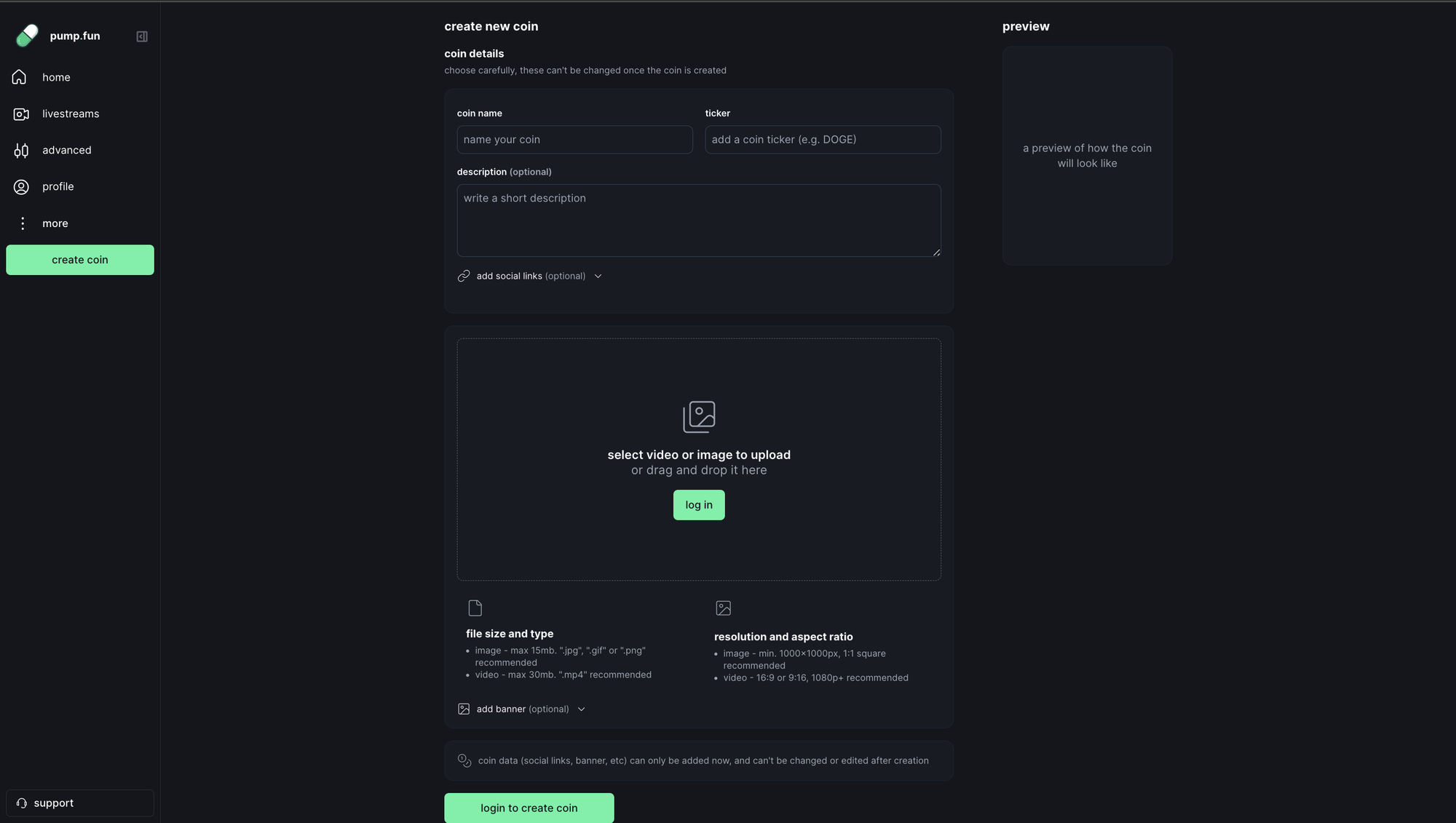
PumpFun uses a bonding curve launch mechanism whereby the token will become tradeable on other DEXs like Jupiter and Raydium once it reaches a market cap of $69K. The swap fees before graduating are 1% and 0.3% once the token becomes tradable. In order to avoid creators rugging the token once they’re tradeable the platform locks liquidity to reduce the likelihood of rugs.
PumpSwap
The launchpad was leaving a lot of money in fees on the table by allowing graduated tokens to trade on other DEXes. They decided to launch an AMM on which graduated tokens would trade on. Also, graduated tokens have been dwindling since over 1k highs in January. For the period of November 24’ to Feb 25’, PumpFun tokens were responsible for about 50% of Raydium daily DEX transactions before the AMM was launched. Tokens from the launchpad accounted for about 42% of Raydium’s cumulative volume over that period.
The founders launched a phone app which eases the use of the platform in direct messaging anyone on PumpFun, launching tokens, sharing coins & profiles as well as getting the latest news concerning coins.
In order to encourage more token launches, the platform recently announced a Creator Revenue Sharing initiative in which coin creators would earn 50% of PumpSwap revenue. Creators are currently earning 5bps in Sol.
At its peak, PumpFun had about 300K daily active addresses and it has now reached cumulative addresses of over 15M. As you can see PumpFun keeps on evolving and introducing new features to compete with other launchpads that are coming up like Believe App, LetsBonk and Boop.fun
BelieveApp
Tokens are launched via a tweet by tagging the LaunchCoin X account which then deploys the token on Meteora. The founder Pasternak launched the platform in order to help web2 founders easily attract through what’s called the Internet Capital Markets where the market decides the true value of the project.
After tagging @launchcoin on X with the $TICKER + NAME, the coin graduates to Meteora only after it reaches $100K market cap. Fees are split 50/50 between creators and the platform.
The launchpad has turned out to become one of the largest on Solana at the moment boasting of over 200K daily transactions according to Believe Screener. The same source sites that there have been over 40k launches with a lifetime volume of over $3.8b
Some interesting projects on Believe at the moment are:
- Dupe: help shoppers find similar products for less while earning rewards. According to them, there are over millions of products from different stores on the platform.
- KledAI: utility token behind an AI data marketplace that boasts over 3 million hours of licensed video content.
- Suby: a payments project that helps accept crypto payments on Telegram and Discord by generating paylinks.
- Dextoro: a non-custodial and on-chain trading app.
- KingNet AI : no-code gaming platform. It's automating game development from game animation & logic, map design and asset creation.
- Polycule: a telegram trading bot for Polymarket. It enables the user to search for market,place orders and manage positions in Telegram.
The launch mechanism of Believe projects tend to lead to the involvement of serious capital allocators like angel investors and venture capitalists. This means that retail investors are able to participate in capital allocation in serious projects that were only available to a select few.
Web2 founders/builders are finding it easy to raise capital using this simple launch mechanism. Since most aren't savvy with launchpool tools, they're able to manage their tokens easily via the good UX that Believe offers.
However, some rogue individuals/organizations can take over prominent X accounts to launch tokens that end up deceiving investors for a while before rugging or slowly becoming less active with project building. This also means that individuals cannot take over a project and 'CTO' the product.
LetBonkFun
This was launched by the Bonk team back in April and is similar to PumpFun except that it has a Raydium auto LP creation with a 1% free ,token supply denomination by the creator and BONK buyback & burn. Revenue distribution is split as shown below.
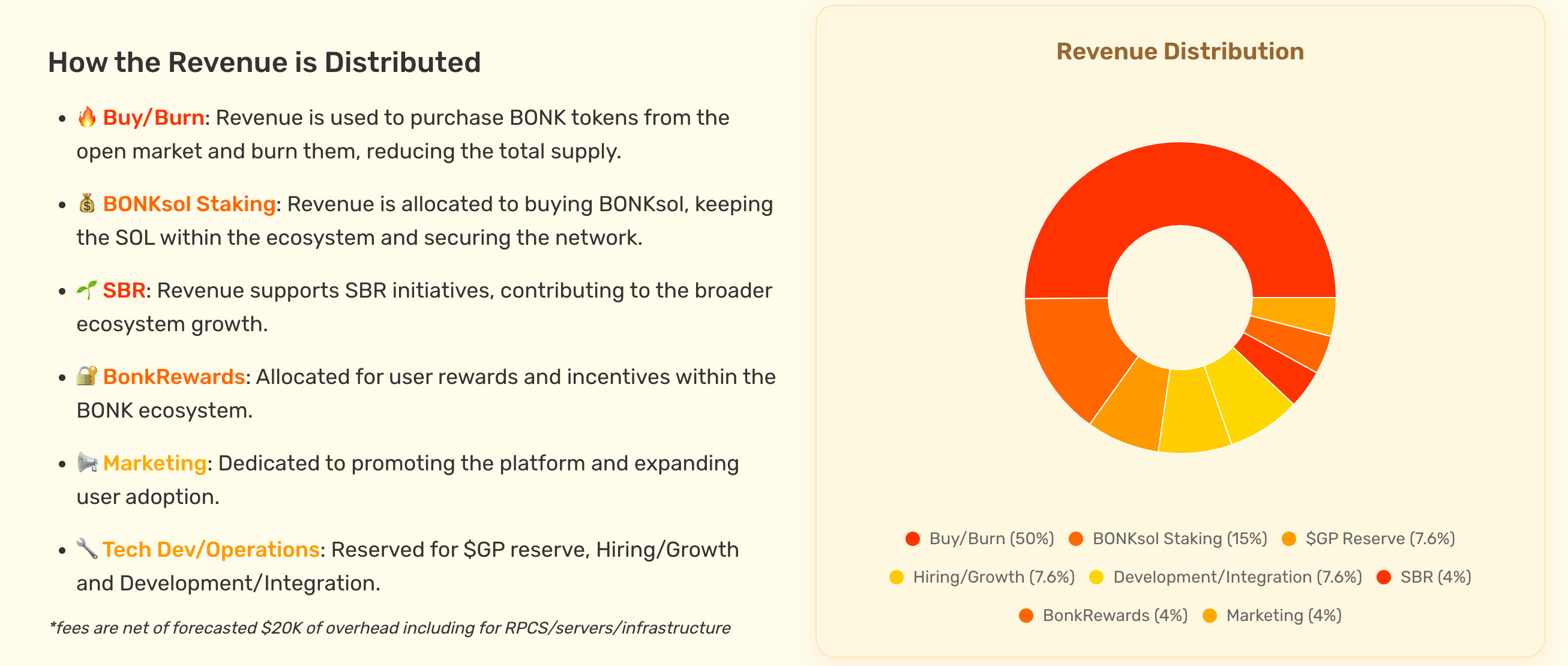
The platform has launched over 120,000 tokens with 1,500 tokens that graduated boasting of $150M in total market cap of tokens launched. Useless and Hosico are the two major tokens from LetsBonkFun with market caps of 100M and 15M respectively. Tech related projects launched from LetsBonk have earned about 1900 SOL while Meme related projects have earned about 400 SOL in creator rewards
LetsBonkFun has announced a hackathon, co-sponsored by Raydium, that is to last 1 month with $200,000 in prizes. The creators are eligible to earn about 1% while letsBonk tech earns 0.5%. At the moment, the top projects in the hackathon are:
- Delegate.fun which enables the automation of on-chain tasks without coding. For example, a creator can schedule burn events,transfers & token deployments.
- SuperBonk is an on-chain arcade game that enables the player to play as Bonk while collecting coins and power-ups.
- Uranus.ag is a project that allows traders to long or short any Solana token since its inception with up to 100X leverage.
Conclusion
We have gone through the evolution of launchpads in the space discussing some pitfalls of the mechanisms that were there at the beginning as well as the kind of issues token creators experienced.
A major problem that I hope will get solved by some of these modern platforms is the issue of snipers who end up taking a majority of supply of the project which hurt distribution and exposes later buyers to huge supply dumps.
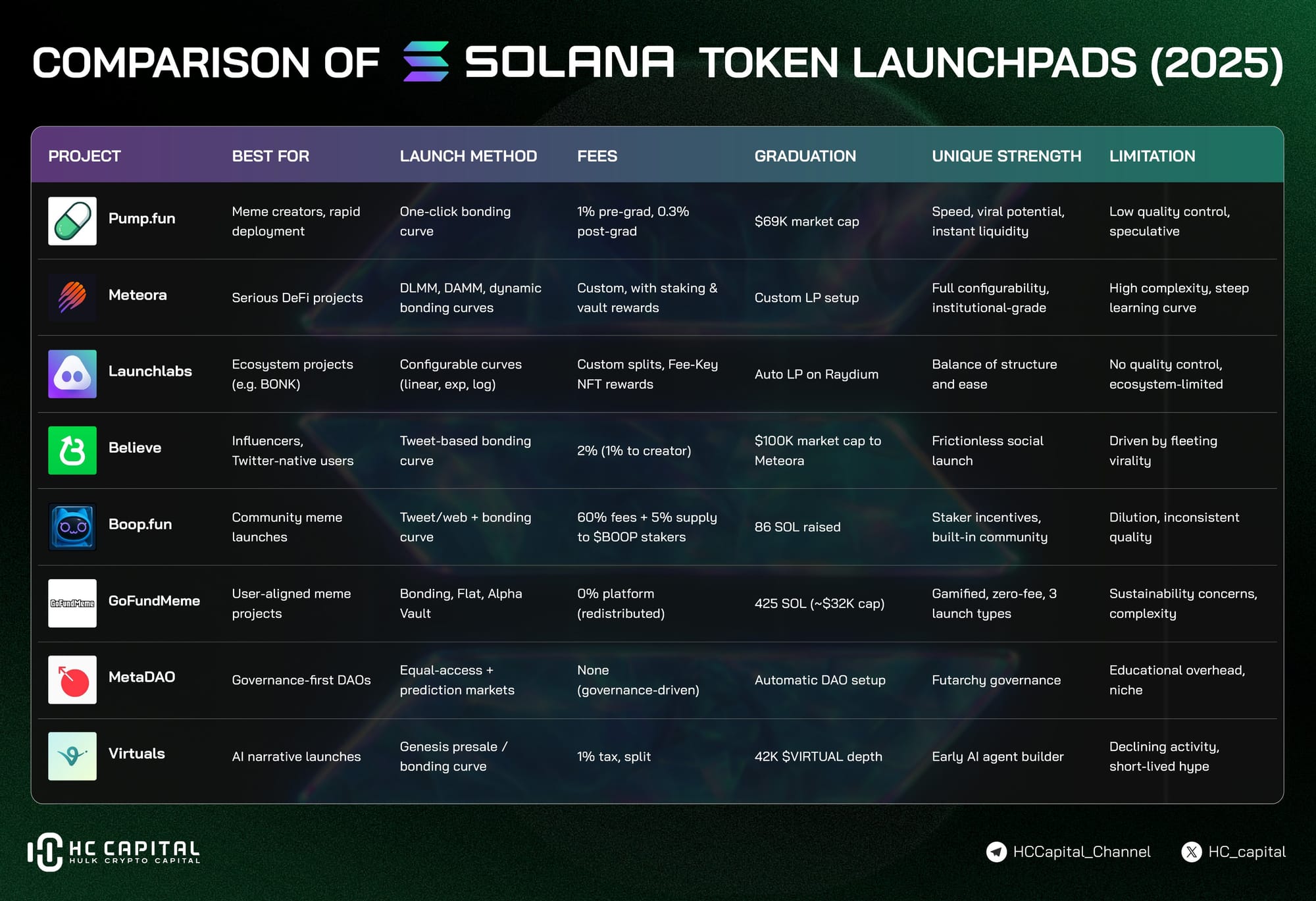
The table above should give you an idea of how different the platforms are at the moment. Our discussion has lead us to the discovery of how good the existing class of launchpads have become.
Resources